Nobuo Uematsu (植松 伸夫 Uematsu Nobuo?, born March 21, 1959) is a Japanese video game composer, best known for scoring the majority of titles in the Final Fantasy series. He is regarded as one of the most famous and respected composers in the video game community. Uematsu, a self-taught musician, began playing the piano at the age of eleven or twelve, with Elton John as his biggest influence.
Uematsu joined Square (later Square Enix) in 1986, where he met Final Fantasy creator Hironobu Sakaguchi. They have worked together on numerous titles, most notably the games in the Final Fantasy series. After nearly 20 years in the company, he left Square Enix in 2004 and founded his own company called Smile Please, as well as the music production company Dog Ear Records. He has since composed music as a freelancer for video games primarily developed by Square Enix and Sakaguchi's development studio Mistwalker.
A handful of soundtracks and arranged albums of Uematsu's game scores have been released. Pieces from his video game works have been performed in concerts worldwide, and numerous Final Fantasy concerts have also been held. He has worked with Grammy Award-winning conductor Arnie Roth on several of these concerts. In 2002, he formed a rock band with colleagues Kenichiro Fukui and Tsuyoshi Sekito called The Black Mages, in which Uematsu plays the keyboard. The band plays arranged rock versions of Uematsu's Final Fantasy compositions.
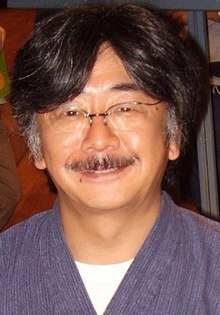
Early Life
Nobuo Uematsu was born in Kōchi, Kōchi Prefecture, Japan. A self-taught musician, he began to play the piano when he was eleven or twelve years old; he did not take any formal piano lessons. He has an older sister who also played the piano. After graduating from Kanagawa University, Uematsu played the keyboard in several amateur bands and composed music for television commercials. When Uematsu was working at a music rental shop in Tokyo, a Square employee asked if he would be interested in creating music for some of the titles they were working on. Although he agreed, Uematsu considered it a side job, and he did not think it would become a full-time job. He said it was a way to make some money on the side, while also keeping his part-time job at the music rental shop.
Career with Square and The Black Mages
The first game Uematsu composed for Square was Genesis in 1985. While working at Square, he met Hironobu Sakaguchi, who asked him if he wanted to create music for some of his games, which Uematsu agreed to. From 1986 to 1987, he created music for a number of games which did not achieve any success, and Square was near bankruptcy. In 1987, Uematsu and Sakaguchi collaborated on what would originally become Sakaguchi's last contribution for Square, Final Fantasy. The game turned out to be a huge success, and ultimately saved Square from bankruptcy.
Final Fantasy's popularity sparked Uematsu's career in video game music, and he would go on to compose music for over 30 titles, most prominently the subsequent games in the Final Fantasy series. He scored the first installment in the SaGa series, The Final Fantasy Legend, in 1989. For the second and fifth games in the series, Final Fantasy Legend II (1990) and Romancing SaGa 2 (1993), he was assisted by Kenji Ito. Uematsu signed on to finish the soundtrack for the critically acclaimed 1995 title Chrono Trigger after the game's composer, Yasunori Mitsuda, contracted peptic ulcers. In 1996, he co-composed the soundtrack to Front Mission: Gun Hazard and created the entire score for DynamiTracer. He also created music for three of the games in the Hanjuku Hero series.
Outside video games, he has composed the main theme for the 2000 animated film Ah! My Goddess: The Movie and co-composed the anime Final Fantasy Unlimited (2001) with Final Fantasy orchestrator Shirō Hamaguchi. He also inspired the Ten Plants concept albums, and released a solo album in 1994, entitled Phantasmagoria. Feeling gradually more dissatisfied and uninspired, Uematsu requested the assistance of composers Masashi Hamauzu and Junya Nakano for the score to Final Fantasy X in 2001. This marked the first time that Uematsu did not compose an entire main-series Final Fantasy soundtrack. For Final Fantasy XI from 2002, he was joined by Naoshi Mizuta, who composed the majority of the soundtrack, and Kumi Tanioka; Uematsu was responsible for only eleven tracks. In 2003, he assisted Hitoshi Sakimoto in scoring Final Fantasy Tactics Advance by providing the main theme.
In 2002, fellow Square Enix colleagues Kenichiro Fukui and Tsuyoshi Sekito asked Uematsu to join them in forming a rock band that focused on reinterpreting and expanding on Uematsu's compositions. He declined their offer at first because he was too busy with work; however, after agreeing to perform with Fukui and Sekito in a live performance as a keyboardist, he decided to join them in making a band. An employee at Square Enix, Mr. Matsushita, chose the name The Black Mages for their band. In 2003, Keiji Kawamori, Arata Hanyuda, and Michio Okamiya also joined the band. The Black Mages have released three studio albums, and have appeared at several concerts to promote their albums.
As a Freelancer
Uematsu left Square Enix in 2004 and formed his own company called Smile Please; he also created the music production company Dog Ear Records in 2006. The reason for Uematsu's departure was that the company moved their office from Meguro to Shinjuku, Tokyo, and he was not comfortable with the new location. He does, however, continue to compose music as a freelancer for Square Enix. In 2005, Uematsu and several members of The Black Mages created the score for the CGI film Final Fantasy VII Advent Children. Uematsu composed only the main theme for Final Fantasy XII (2006); he was originally offered the job of creating the full score, but Sakimoto was eventually assigned as the main composer instead. Uematsu was also initially going to create the theme song for Final Fantasy XIII (2010). However, after being assigned the task of creating the entire score of Final Fantasy XIV, Uematsu decided to hand the job over to the main Final Fantasy XIII composer, Hamauzu.
Uematsu also works closely with Sakaguchi's development studio Mistwalker, and has composed the games in the Blue Dragon series, Lost Odyssey (2007), and Away Shuffle Dungeon (2008); he was also the composer of the canceled game Cry On. He is currently composing the music for another Mistwalker title The Last Story (2011).
He scored the PlayStation Portable title Anata o Yurusanai in 2007 and the arcade game Lord of Vermillion in 2008. Uematsu created the main theme for the multi-composer game Super Smash Bros. Brawl in 2008. He composed the music for the 2009 anime Guin Saga; this marked the first time he provided a full score for an animated series. He recently worked on Sakura Note for the Nintendo DS and is currently working on another DS project for Level 5 and Brownie Brown called Fantasy Life.
Personal Life
Uematsu currently resides in Tokyo, Japan with his wife, Reiko, whom he met during his college days, and their Beagle, Pao. They also have a summer cabin in Yamanakako, Yamanashi. In his spare time, he enjoys watching professional wrestling, drinking beer, and bicycling. Uematsu has said that he originally wanted to become a professional wrestler, and that it was a career dream when he was little.
Tuesday, July 14, 2009
Monday, July 13, 2009
Hironobu Sakaguchi (Figure)
Hironobu Sakaguchi (坂口 博信 Sakaguchi Hironobu?) (born November 25, 1962) is a Japanese game designer, game director and game producer. He is famous around the world as the creator of the Final Fantasy series, and he has had a long career in gaming with over 80 million units of video games sold worldwide. He left Square Enix and founded a studio called Mistwalker in 2004.
Early years
Sakaguchi was born in Hitachi, Ibaraki, Japan. He studied electrical engineering while attending Yokohama National University, but dropped out in 1983 mid-semester with Hiromichi Tanaka.
Square
On leaving the university, Sakaguchi became a part-time employee of Square, a newly formed branch of Denyūsha Electric Company founded by Masafumi Miyamoto. When Square became an independent company in 1986, he became a full-time employee as the Director of Planning and Development. The company's first games were very unsuccessful. Sakaguchi then decided to create his final work in the game industry with the rest of Square's money, and appropriately named it Final Fantasy, which he claimed—given Square's uncertain future at the time—was an ironic gesture. The game was released in Japan for the Nintendo Entertainment System on December 18, 1987. The game was successful across Japan. Under Sakaguchi's watchful eye, Final Fantasy developed into a successful franchise, spanning from stand alone stories to spin-offs to direct sequels. In 1991, following the release of Final Fantasy IV for the Super Nintendo Entertainment System, he was honoured with the position of Executive Vice President. The last Final Fantasy game he directed was Final Fantasy V, becoming the producer for future installments of the franchise. In 1995, he became President at Square USA, Inc. His final role as game producer was for Final Fantasy IX. In an interview at the time he described it as his favourite Final Fantasy. He later went on to serve more as an executive producer of the series, as well as many of Square's other games, including Vagrant Story, Parasite Eve and Kingdom Hearts.
Hironobu Sakaguchi became the third person inducted into the Academy of Interactive Arts and Sciences' Hall of Fame on April 5, 2000. His Hall of Fame status was given to him because of the tremendous number of video games he has sold and created.
Time as film director
A long time proponent of bringing together the story-telling vehicle of film and the interactive elements of games, Sakaguchi took the leap from games to film when he made his debut as film director in Final Fantasy: The Spirits Within, an animated motion picture based on his world-famous Final Fantasy series. Despite some positive reviews, the movie was the biggest animated box office bomb in cinema history, losing over 120 million dollars.
Resignation from Square
Sakaguchi voluntarily stepped down from his post as an executive vice president at Square. This event also reduced Square's financial capital. Square later merged with its rival, the Enix Corporation, which led to the creation of Square Enix in 2003. In 2004, Sakaguchi founded Mistwalker with the financial backing of Microsoft Game Studios.
Mistwalker
In 2001, Sakaguchi founded Mistwalker, which began operation in 2004. In February 2005, it was announced that Mistwalker would be working with Microsoft Game Studios to create two RPGs for the Xbox 360. Still, the company remains independent from console exclusivity. Sakaguchi released the works Blue Dragon in 2006, and Lost Odyssey in 2007 on the Xbox 360, and ASH: Archaic Sealed Heat on the Nintendo DS. He was developing an action-RPG, titled Cry On, until the project was canceled in December 2008.
Currently he is working on a new "large scale project" on which Sakaguchi comments: "I’m betting a lot on this project." This game was announced in January 2010 to be The Last Story, a co-production with Nintendo for the Wii. It was revealed in an interview on Nintendo's website that Sakaguchi is the director of the Last Story, which marks his first time as director of a game since Final Fantasy V.
In July 2010, Sakaguchi announced on Mistwalker's blog that The Last Story may be the final title of his career. However, this turned out to be a translation error in which he meant that he was working on this as if it was his last game.
Early years
Sakaguchi was born in Hitachi, Ibaraki, Japan. He studied electrical engineering while attending Yokohama National University, but dropped out in 1983 mid-semester with Hiromichi Tanaka.
Square
On leaving the university, Sakaguchi became a part-time employee of Square, a newly formed branch of Denyūsha Electric Company founded by Masafumi Miyamoto. When Square became an independent company in 1986, he became a full-time employee as the Director of Planning and Development. The company's first games were very unsuccessful. Sakaguchi then decided to create his final work in the game industry with the rest of Square's money, and appropriately named it Final Fantasy, which he claimed—given Square's uncertain future at the time—was an ironic gesture. The game was released in Japan for the Nintendo Entertainment System on December 18, 1987. The game was successful across Japan. Under Sakaguchi's watchful eye, Final Fantasy developed into a successful franchise, spanning from stand alone stories to spin-offs to direct sequels. In 1991, following the release of Final Fantasy IV for the Super Nintendo Entertainment System, he was honoured with the position of Executive Vice President. The last Final Fantasy game he directed was Final Fantasy V, becoming the producer for future installments of the franchise. In 1995, he became President at Square USA, Inc. His final role as game producer was for Final Fantasy IX. In an interview at the time he described it as his favourite Final Fantasy. He later went on to serve more as an executive producer of the series, as well as many of Square's other games, including Vagrant Story, Parasite Eve and Kingdom Hearts.
Hironobu Sakaguchi became the third person inducted into the Academy of Interactive Arts and Sciences' Hall of Fame on April 5, 2000. His Hall of Fame status was given to him because of the tremendous number of video games he has sold and created.
Time as film director
A long time proponent of bringing together the story-telling vehicle of film and the interactive elements of games, Sakaguchi took the leap from games to film when he made his debut as film director in Final Fantasy: The Spirits Within, an animated motion picture based on his world-famous Final Fantasy series. Despite some positive reviews, the movie was the biggest animated box office bomb in cinema history, losing over 120 million dollars.
Resignation from Square
Sakaguchi voluntarily stepped down from his post as an executive vice president at Square. This event also reduced Square's financial capital. Square later merged with its rival, the Enix Corporation, which led to the creation of Square Enix in 2003. In 2004, Sakaguchi founded Mistwalker with the financial backing of Microsoft Game Studios.
Mistwalker
Sakaguchi giving a presentation on Blue Dragon at the Tokyo Game Show 2006. convention.
In 2001, Sakaguchi founded Mistwalker, which began operation in 2004. In February 2005, it was announced that Mistwalker would be working with Microsoft Game Studios to create two RPGs for the Xbox 360. Still, the company remains independent from console exclusivity. Sakaguchi released the works Blue Dragon in 2006, and Lost Odyssey in 2007 on the Xbox 360, and ASH: Archaic Sealed Heat on the Nintendo DS. He was developing an action-RPG, titled Cry On, until the project was canceled in December 2008.
Currently he is working on a new "large scale project" on which Sakaguchi comments: "I’m betting a lot on this project." This game was announced in January 2010 to be The Last Story, a co-production with Nintendo for the Wii. It was revealed in an interview on Nintendo's website that Sakaguchi is the director of the Last Story, which marks his first time as director of a game since Final Fantasy V.
In July 2010, Sakaguchi announced on Mistwalker's blog that The Last Story may be the final title of his career. However, this turned out to be a translation error in which he meant that he was working on this as if it was his last game.
Thursday, July 9, 2009
The Art of Computer Programming
The Art of Computer Programming (acronym: TAOCP) is a comprehensive monograph written by Donald Knuth that covers many kinds of programming algorithms and their analysis. Knuth began the project, originally conceived as a single book, in 1962. The first three of what were then expected to be seven volumes were published in rapid succession in 1968, 1969, and 1973. The first installment of Volume 4 was not published until February 2005. Additional installments are planned for release approximately biannually with a break before fascicle 5 to finish the "Selected Papers" series.
History
Considered an expert at writing compilers, Knuth started to write a book about compiler design in 1962, and soon realized that the scope of the book needed to be much larger. In June 1965, Knuth finished the first draft of what was originally planned to be a single volume of twelve chapters. His hand-written manuscript was 3,000 pages long: he had assumed that about five hand-written pages would translate into one printed page, but his publisher said instead that about 1½ hand-written pages translated to one printed page. This meant the book would be approximately 2,000 pages in length. At this point, the plan was changed: the book would be published in seven volumes, each with just one or two chapters. Due to the growth in the material, the plan for Volume 4 has since expanded to include Volumes 4A, 4B, 4C, and possibly 4D.
In 1976, Knuth prepared a second edition of Volume 2, requiring it to be typeset again, but the style of type used in the first edition (called hot type) was no longer available. In 1977, he decided to spend a few months working up something more suitable. Eight years later, he returned with TeX, which is currently used for all volumes.
The famous offer of a reward check worth "one hexadecimal dollar" (100HEX base 16 cents, in decimal, is $2.56) for any errors found, and the correction of these errors in subsequent printings, has contributed to the highly polished and still-authoritative nature of the work, long after its first publication. Another characteristic of the volumes is the variation in the difficulty of the exercises. The level of difficulty ranges from "warm-up" exercises to unsolved research problems, providing a challenge for any reader. Knuth's dedication is also famous:
Assembly language in the book
All examples in the books use a language called "MIX assembly language", which runs on the hypothetical MIX computer. (Currently, the MIX computer is being replaced by the MMIX computer, which is a RISC version.) Software such as GNU MDK exists to provide emulation of the MIX architecture.
Some readers are put off by the use of assembly language, but Knuth considers this necessary because algorithms need to be in context in order for their speed and memory usage to be judged. This does, however, limit the accessibility of the book for many readers, and limits its usefulness as a "cookbook" for practicing programmers, who may not be familiar with assembly, or who may have no particular desire to translate assembly language code into a high-level language. A number of more accessible algorithms textbooks using high-level language examples exist and are popular for precisely these reasons.
Critical response
American Scientist has included this work among "100 or so Books that shaped a Century of Science", referring to the 20th century, and within the computer science community it is regarded as the first and still the best comprehensive treatment of its subject. Covers of the third edition of Volume 1 quote Bill Gates as saying, "If you think you're a really good programmer . . . read (Knuth's) Art of Computer Programming . . . You should definitely send me a résumé if you can read the whole thing." [nb 2] The New York Times referred to it as "the profession's defining treatise".
History
Donald Knuth in 2005
In 1976, Knuth prepared a second edition of Volume 2, requiring it to be typeset again, but the style of type used in the first edition (called hot type) was no longer available. In 1977, he decided to spend a few months working up something more suitable. Eight years later, he returned with TeX, which is currently used for all volumes.
The famous offer of a reward check worth "one hexadecimal dollar" (100HEX base 16 cents, in decimal, is $2.56) for any errors found, and the correction of these errors in subsequent printings, has contributed to the highly polished and still-authoritative nature of the work, long after its first publication. Another characteristic of the volumes is the variation in the difficulty of the exercises. The level of difficulty ranges from "warm-up" exercises to unsolved research problems, providing a challenge for any reader. Knuth's dedication is also famous:
- This series of books is affectionately dedicated
- to the Type 650 computer once installed at
- Case Institute of Technology,
- in remembrance of many pleasant evenings.[nb 1]
Assembly language in the book
All examples in the books use a language called "MIX assembly language", which runs on the hypothetical MIX computer. (Currently, the MIX computer is being replaced by the MMIX computer, which is a RISC version.) Software such as GNU MDK exists to provide emulation of the MIX architecture.
Some readers are put off by the use of assembly language, but Knuth considers this necessary because algorithms need to be in context in order for their speed and memory usage to be judged. This does, however, limit the accessibility of the book for many readers, and limits its usefulness as a "cookbook" for practicing programmers, who may not be familiar with assembly, or who may have no particular desire to translate assembly language code into a high-level language. A number of more accessible algorithms textbooks using high-level language examples exist and are popular for precisely these reasons.
Critical response
American Scientist has included this work among "100 or so Books that shaped a Century of Science", referring to the 20th century, and within the computer science community it is regarded as the first and still the best comprehensive treatment of its subject. Covers of the third edition of Volume 1 quote Bill Gates as saying, "If you think you're a really good programmer . . . read (Knuth's) Art of Computer Programming . . . You should definitely send me a résumé if you can read the whole thing." [nb 2] The New York Times referred to it as "the profession's defining treatise".
Sunday, July 5, 2009
Debugging
Debugging is a methodical process of finding and reducing the number of bugs, or defects, in a computer program or a piece of electronic hardware, thus making it behave as expected. Debugging tends to be harder when various subsystems are tightly coupled, as changes in one may cause bugs to emerge in another. Many books have been written about debugging (see below: Further reading), as it involves numerous aspects, including: interactive debugging, control flow, integration testing, log files, monitoring, memory dumps, Statistical Process Control, and special design tactics to improve detection while simplifying changes.
Origin
There is some controversy over the origin of the term "debugging."
The terms "bug" and "debugging" are both popularly attributed to Admiral Grace Hopper in the 1940s. While she was working on a Mark II Computer at Harvard University, her associates discovered a moth stuck in a relay and thereby impeding operation, whereupon she remarked that they were "debugging" the system. However the term "bug" in the meaning of technical error dates back at least to 1878 and Thomas Edison (see software bug for a full discussion), and "debugging" seems to have been used as a term in aeronautics before entering the world of computers. Indeed, in an interview Grace Hopper remarked that she was not coining the term. The moth fit the already existing terminology, so she saved it.
The Oxford English Dictionary entry for "debug" quotes the term "debugging" used in reference to airplane engine testing in a 1945 article in the Journal of the Royal Aeronautical Society, Hopper's bug was found on the 9th of September in 1947. The term was not adopted by computer programmers until the early 1950s. The seminal article by Gill in 1951 is the earliest in-depth discussion of programming errors, but it does not use the term "bug" or "debugging". In the ACM's digital library, the term "debugging" is first used in three papers from 1952 ACM National Meetings. Two of the three use the term in quotation marks. By 1963, "debugging" was a common enough term to be mentioned in passing without explanation on page 1 of the CTSS manual.
Kidwell's article Stalking the Elusive Computer Bug discusses the etymology of "bug" and "debug" in greater detail.
The scope of debugging
As software and electronic systems have become generally more complex, the various common debugging techniques have expanded with more methods to detect anomalies, assess impact, and schedule software patches or full updates to a system. The words "anomaly" and "discrepancy" can be used, as being more neutral terms, to avoid the words "error" and "defect" or "bug" where there might be an implication that all so-called errors, defects or bugs must be fixed (at all costs). Instead, an impact assessment can be made to determine if changes to remove an anomaly (or discrepancy) would be cost-effective for the system, or perhaps a scheduled new release might render the change(s) unnecessary. Not all issues are life-critical or mission-critical in a system. Also, it is important to avoid the situation where a change might be more upsetting to users, long-term, than living with the known problem(s) (where the "cure would be worse than the disease"). Basing decisions of the acceptability of some anomalies can avoid a culture of a "zero-defects" mandate, where people might be tempted to deny the existence of problems so that the result would appear as zero defects. Considering the collateral issues, such as the cost-versus-benefit impact assessment, then broader debugging techniques will expand to determine the frequency of anomalies (how often the same "bugs" occur) to help assess their impact to the overall system.
Tools
Debugging ranges, in complexity, from fixing simple errors to performing lengthy and tiresome tasks of data collection, analysis, and scheduling updates. The debugging skill of the programmer can be a major factor in the ability to debug a problem, but the difficulty of software debugging varies greatly with the complexity of the system, and also depends, to some extent, on the programming language(s) used and the available tools, such as debuggers. Debuggers are software tools which enable the programmer to monitor the execution of a program, stop it, re-start it, set breakpoints, change values in memory and even, in some cases, go back in time. The term debugger can also refer to the person who is doing the debugging.
Generally, high-level programming languages, such as Java, make debugging easier, because they have features such as exception handling that make real sources of erratic behaviour easier to spot. In lower-level programming languages such as C or assembly, bugs may cause silent problems such as memory corruption, and it is often difficult to see where the initial problem happened. In those cases, memory debugger tools may be needed.
In certain situations, general purpose software tools that are language specific in nature can be very useful. These take the form of static code analysis tools. These tools look for a very specific set of known problems, some common and some rare, within the source code. All such issues detected by these tools would rarely be picked up by a compiler or interpreter, thus they are not syntax checkers, but more semantic checkers. Some tools claim to be able to detect 300+ unique problems. Both commercial and free tools exist in various languages. These tools can be extremely useful when checking very large source trees, where it is impractical to do code walkthroughs. A typical example of a problem detected would be a variable dereference that occurs before the variable is assigned a value. Another example would be to perform strong type checking when the language does not require such. Thus, they are better at locating likely errors, versus actual errors. As a result, these tools have a reputation of false positives. The old Unix lint program is an early example.
For debugging electronic hardware (e.g., computer hardware) as well as low-level software (e.g., BIOSes, device drivers) and firmware, instruments such as oscilloscopes, logic analyzers or in-circuit emulators (ICEs) are often used, alone or in combination. An ICE may perform many of the typical software debugger's tasks on low-level software and firmware.
Typical debugging process
Normally the first step in debugging is to attempt to reproduce the problem. This can be a non-trivial task, for example as with parallel processes or some unusual software bugs. Also, specific user environment and usage history can make it difficult to reproduce the problem.
After the bug is reproduced, the input of the program may need to be simplified to make it easier to debug. For example, a bug in a compiler can make it crash when parsing some large source file. However, after simplification of the test case, only few lines from the original source file can be sufficient to reproduce the same crash. Such simplification can be made manually, using a divide-and-conquer approach. The programmer will try to remove some parts of original test case and check if the problem still exists. When debugging the problem in a GUI, the programmer can try to skip some user interaction from the original problem description and check if remaining actions are sufficient for bugs to appear.
After the test case is sufficiently simplified, a programmer can use a debugger tool to examine program states (values of variables, plus the call stack) and track down the origin of the problem(s). Alternatively, tracing can be used. In simple cases, tracing is just a few print statements, which output the values of variables at certain points of program execution.
Various debugging techniques
Print (or tracing) debugging is the act of watching (live or recorded) trace statements, or print statements, that indicate the flow of execution of a process.
Remote debugging is the process of debugging a program running on a system different than the debugger. To start remote debugging, debugger connects to a remote system over a network. Once connected, debugger can control the execution of the program on the remote system and retrieve information about its state.
Post-mortem debugging is debugging of the program after it has already crashed. Related techniques often include various tracing techniques (for example, [8]) and/or analysis of memory dump (or core dump) of the crashed process. The dump of the process could be obtained automatically by the system (for example, when process has terminated due to an unhandled exception), or by a programmer-inserted instruction, or manually by the interactive user.
Delta Debugging - technique of automating test case simplification. [9]:p.123
Saff Squeeze - technique of isolating failure within the test using progressive inlining of parts of the failing test.
Origin
There is some controversy over the origin of the term "debugging."
The terms "bug" and "debugging" are both popularly attributed to Admiral Grace Hopper in the 1940s. While she was working on a Mark II Computer at Harvard University, her associates discovered a moth stuck in a relay and thereby impeding operation, whereupon she remarked that they were "debugging" the system. However the term "bug" in the meaning of technical error dates back at least to 1878 and Thomas Edison (see software bug for a full discussion), and "debugging" seems to have been used as a term in aeronautics before entering the world of computers. Indeed, in an interview Grace Hopper remarked that she was not coining the term. The moth fit the already existing terminology, so she saved it.
The Oxford English Dictionary entry for "debug" quotes the term "debugging" used in reference to airplane engine testing in a 1945 article in the Journal of the Royal Aeronautical Society, Hopper's bug was found on the 9th of September in 1947. The term was not adopted by computer programmers until the early 1950s. The seminal article by Gill in 1951 is the earliest in-depth discussion of programming errors, but it does not use the term "bug" or "debugging". In the ACM's digital library, the term "debugging" is first used in three papers from 1952 ACM National Meetings. Two of the three use the term in quotation marks. By 1963, "debugging" was a common enough term to be mentioned in passing without explanation on page 1 of the CTSS manual.
Kidwell's article Stalking the Elusive Computer Bug discusses the etymology of "bug" and "debug" in greater detail.
The scope of debugging
As software and electronic systems have become generally more complex, the various common debugging techniques have expanded with more methods to detect anomalies, assess impact, and schedule software patches or full updates to a system. The words "anomaly" and "discrepancy" can be used, as being more neutral terms, to avoid the words "error" and "defect" or "bug" where there might be an implication that all so-called errors, defects or bugs must be fixed (at all costs). Instead, an impact assessment can be made to determine if changes to remove an anomaly (or discrepancy) would be cost-effective for the system, or perhaps a scheduled new release might render the change(s) unnecessary. Not all issues are life-critical or mission-critical in a system. Also, it is important to avoid the situation where a change might be more upsetting to users, long-term, than living with the known problem(s) (where the "cure would be worse than the disease"). Basing decisions of the acceptability of some anomalies can avoid a culture of a "zero-defects" mandate, where people might be tempted to deny the existence of problems so that the result would appear as zero defects. Considering the collateral issues, such as the cost-versus-benefit impact assessment, then broader debugging techniques will expand to determine the frequency of anomalies (how often the same "bugs" occur) to help assess their impact to the overall system.
Tools
Debugging ranges, in complexity, from fixing simple errors to performing lengthy and tiresome tasks of data collection, analysis, and scheduling updates. The debugging skill of the programmer can be a major factor in the ability to debug a problem, but the difficulty of software debugging varies greatly with the complexity of the system, and also depends, to some extent, on the programming language(s) used and the available tools, such as debuggers. Debuggers are software tools which enable the programmer to monitor the execution of a program, stop it, re-start it, set breakpoints, change values in memory and even, in some cases, go back in time. The term debugger can also refer to the person who is doing the debugging.
Generally, high-level programming languages, such as Java, make debugging easier, because they have features such as exception handling that make real sources of erratic behaviour easier to spot. In lower-level programming languages such as C or assembly, bugs may cause silent problems such as memory corruption, and it is often difficult to see where the initial problem happened. In those cases, memory debugger tools may be needed.
In certain situations, general purpose software tools that are language specific in nature can be very useful. These take the form of static code analysis tools. These tools look for a very specific set of known problems, some common and some rare, within the source code. All such issues detected by these tools would rarely be picked up by a compiler or interpreter, thus they are not syntax checkers, but more semantic checkers. Some tools claim to be able to detect 300+ unique problems. Both commercial and free tools exist in various languages. These tools can be extremely useful when checking very large source trees, where it is impractical to do code walkthroughs. A typical example of a problem detected would be a variable dereference that occurs before the variable is assigned a value. Another example would be to perform strong type checking when the language does not require such. Thus, they are better at locating likely errors, versus actual errors. As a result, these tools have a reputation of false positives. The old Unix lint program is an early example.
For debugging electronic hardware (e.g., computer hardware) as well as low-level software (e.g., BIOSes, device drivers) and firmware, instruments such as oscilloscopes, logic analyzers or in-circuit emulators (ICEs) are often used, alone or in combination. An ICE may perform many of the typical software debugger's tasks on low-level software and firmware.
Typical debugging process
Normally the first step in debugging is to attempt to reproduce the problem. This can be a non-trivial task, for example as with parallel processes or some unusual software bugs. Also, specific user environment and usage history can make it difficult to reproduce the problem.
After the bug is reproduced, the input of the program may need to be simplified to make it easier to debug. For example, a bug in a compiler can make it crash when parsing some large source file. However, after simplification of the test case, only few lines from the original source file can be sufficient to reproduce the same crash. Such simplification can be made manually, using a divide-and-conquer approach. The programmer will try to remove some parts of original test case and check if the problem still exists. When debugging the problem in a GUI, the programmer can try to skip some user interaction from the original problem description and check if remaining actions are sufficient for bugs to appear.
After the test case is sufficiently simplified, a programmer can use a debugger tool to examine program states (values of variables, plus the call stack) and track down the origin of the problem(s). Alternatively, tracing can be used. In simple cases, tracing is just a few print statements, which output the values of variables at certain points of program execution.
Various debugging techniques
Print (or tracing) debugging is the act of watching (live or recorded) trace statements, or print statements, that indicate the flow of execution of a process.
Remote debugging is the process of debugging a program running on a system different than the debugger. To start remote debugging, debugger connects to a remote system over a network. Once connected, debugger can control the execution of the program on the remote system and retrieve information about its state.
Post-mortem debugging is debugging of the program after it has already crashed. Related techniques often include various tracing techniques (for example, [8]) and/or analysis of memory dump (or core dump) of the crashed process. The dump of the process could be obtained automatically by the system (for example, when process has terminated due to an unhandled exception), or by a programmer-inserted instruction, or manually by the interactive user.
Delta Debugging - technique of automating test case simplification. [9]:p.123
Saff Squeeze - technique of isolating failure within the test using progressive inlining of parts of the failing test.